



China on the way to revive majesty of Asian elephants









In 2015, to save Yang Niu, an abandoned newborn elephant with an irregular heartbeat, umbilical cord infection, and other diseases, the center sought support from elephant experts in Thailand and detailed therapeutic plans after several group consultations.
"Healing the wounded and rescuing the dying shouldn't be restricted by borders," Bao said.
Another significant step to protect elephants came into effect on January 1, 2018 -- a new law stating it is illegal to process or sell ivory and its products in China, once the world's popular market. By the end of last year, all 172 ivory factories and shops had been closed.
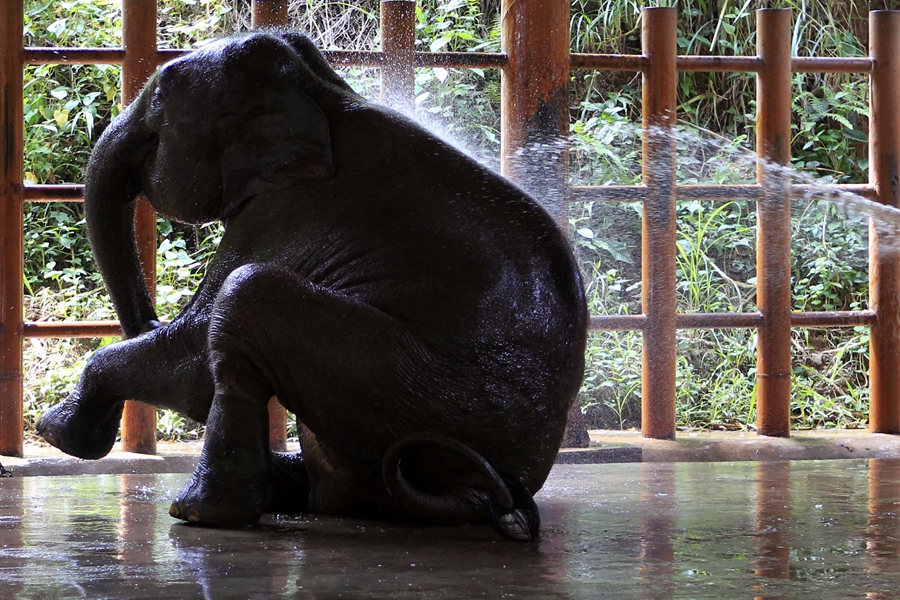
After 13 years at the reserve, Ranran, once a dying girl caught by a steel trap, has mostly recovered, growing from 155 cm, 500 kg to 225 cm, 2,200 kg.
She is shy and timid but actively participates in her daily training activities, preparing for her return to the rainforest one day.


- Tianjin Port's smart terminal lauded
- China focuses on high-value agri exports
- Top court sets out resolution model for novel plant variety dispute cases
- Favorable weather and mechanized ops aid wheat harvesting nationwide
- Rural vitalization: Live and empowering
- Foreign delegates gain a close look at grassroots livelihood, protection of people's rights





