



Lavenders bloom at Xinjiang's tourism festival









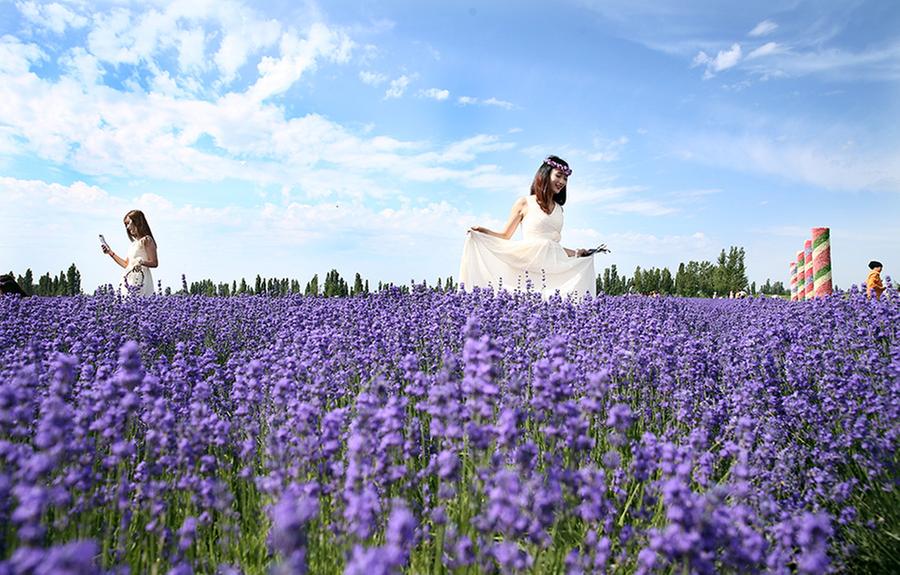 |
| Tourists walk around a lavender plantation in Huocheng county, based in the Ili Kazakh autonomous prefecture, Northwest China's Xinjiang Uygur autonomous region, on June 17, 2017. [Photo by Zou Hong/China Daily] |
More than 20,000 people spent the weekend travelling to Huocheng county, Northwest China's Xinjiang Uygur autonmous region, in a bid to visit a range of lavender farms in celebration of the season bloom.
The farms, which produce 97 percent of China's lavender, now sport a sea of purple, and have turned into a major tourist attraction with an annual festival, as the plant has reached full bloom. Located in the Ily Valley, Huocheng has a similar climate condition of that in Provence, France, which has become the largest lavender producer in the world. Huocheng, however, takes home the title of second place, and currently has 1,400 hectares of lavender farms. The region has also been called oriental province. In recent years, many nearby farmers have moved from planting traditional crops, such as growing corn and wheat, to filling their fields with lavender. The move has become the result of the growth in the lavender business, which has become bigger and more profitable.


- Foreign delegates gain a close look at grassroots livelihood, protection of people's rights
- Primary school students tell revolutionary stories of Jinggangshan in English
- Shanxi emergency official probed after deadly mine blast
- One hundred thirty-six artifacts from Cambodia on display in Shanxi
- Hukou Waterfall roars to life after heavy upstream rainfall
- Lion King co-director heads jury at Chongqing animation festival





