



China launches new twin BeiDou-3 navigation satellites










XICHANG - China on Sunday sent twin satellites into space via a single carrier rocket, entering a period with unprecedentedly intensive launches of BeiDou satellites.
The Long March-3B carrier rocket lifted off from Xichang Satellite Launch Center in Southwest China's Sichuan province at 9:48 am, the 281st mission of the Long March rocket series.
The twin satellites are the 33rd and 34th of the BeiDou navigation system. They entered orbit more than three hours after the launch. After a series of tests, they will work together with eight BeiDou-3 satellites already in orbit, said the launch service provider.
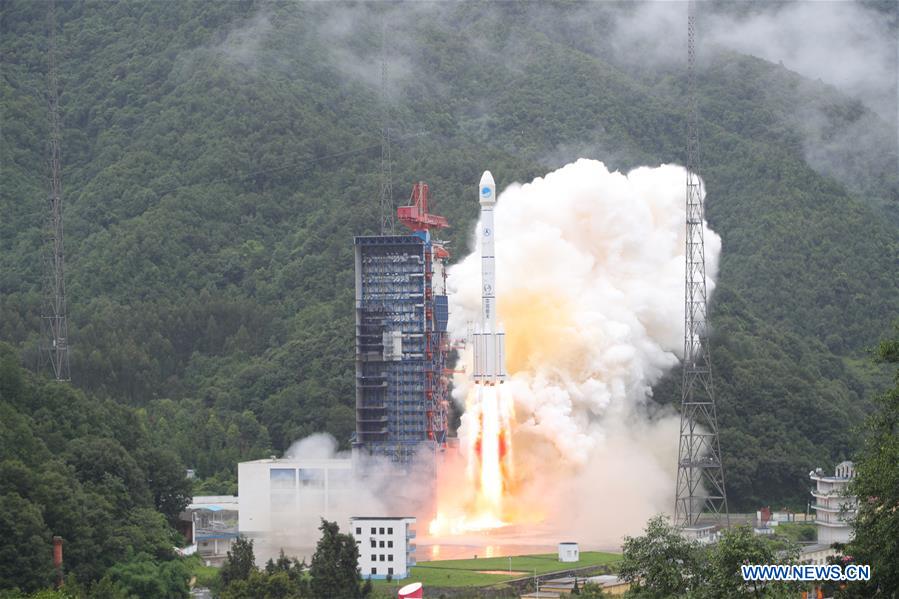
A basic system with 18 BeiDou-3 satellites orbiting will be in place by the year end, which will serve countries participating in the China-proposed Belt and Road Initiative.
Named after the Chinese term for the Big Dipper, the BeiDou system started serving China in 2000 and the Asia-Pacific region in 2012. It will be the 4th global satellite navigation system after the US GPS system, Russia's GLONASS and the European Union's Galileo.
The satellites and the rocket for Sunday's launch were developed by the China Academy of Space Technology and China Academy of Launch Vehicle Technology, respectively.


- China unveils 2026-28 plan to boost entrepreneurship, support jobs and innovation
- Latin American delegates impressed by Shanghai's urban renewal
- Foreign delegates experience China's commitment to human rights in Tianjin
- Ningxia performs regions first half-matched stem cell transplant
- Chinese courier company J&T Express under probe over safety issues
- Gaokao math question turns Ningxia pagodas into online sensation





