 |
|
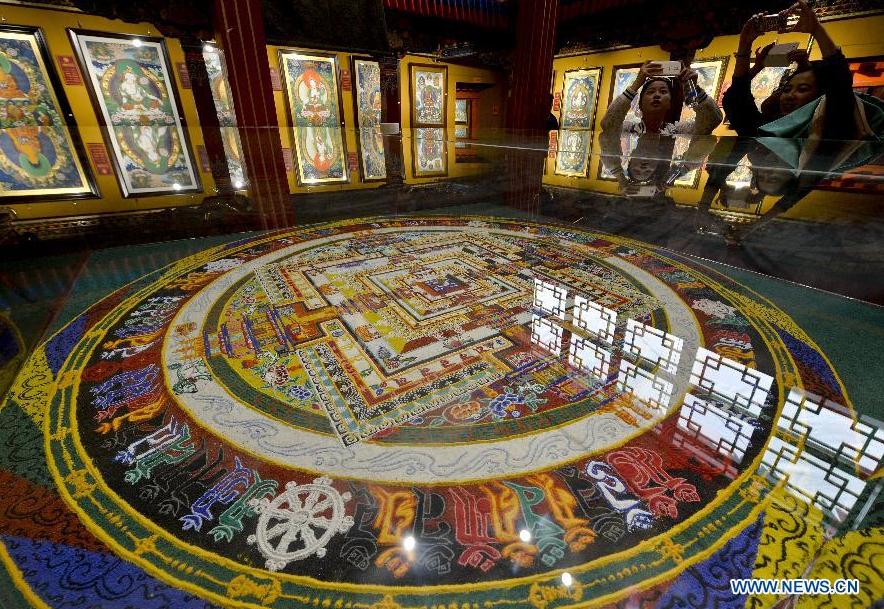
Visitors take photos of Thangka during a Thangka art festival in Lhasa, Tibet autonomous region, Sept 25, 2014. [Photo/Xinhua] |
How did it evolve?
Between the 7th and the 9th centuries, the Thangka art style in Tibet was dominated by Paldre — a Nepali style.
From the 13th to 15th centuries, a new style called the Chigang emerged in Tibet. In the 15th century, the master Manla Dondrub from Lhokha, about 200 kilometers from Lhasa, together with other masters, created two styles with more Tibetan elements called the Man and the Chen, and those two styles became famous in the 16th and 17th centuries.
In the early 17th century, Choyang Gyatso, a great master and one of the disciples of the fourth Panchen Lama (1567-1662), created another style known as Manluk Sarma style.
When the fifth Dalai Lama (1617-1682) was expanding the White Hall for the Potala Palace, Choyang Gyatso was invited to carry out the important mission of painting the massive frescos.
The Manluk Sarma style remains popular today.
|
|
|
|
|
|
Copyright 1995 - . All rights reserved. The content (including but not limited to text, photo, multimedia information, etc) published in this site belongs to China Daily Information Co (CDIC). Without written authorization from CDIC, such content shall not be republished or used in any form. Note: Browsers with 1024*768 or higher resolution are suggested for this site.
License for publishing multimedia online 0108263 Registration Number: 20100000002731