



A maverick among peers









Homecoming
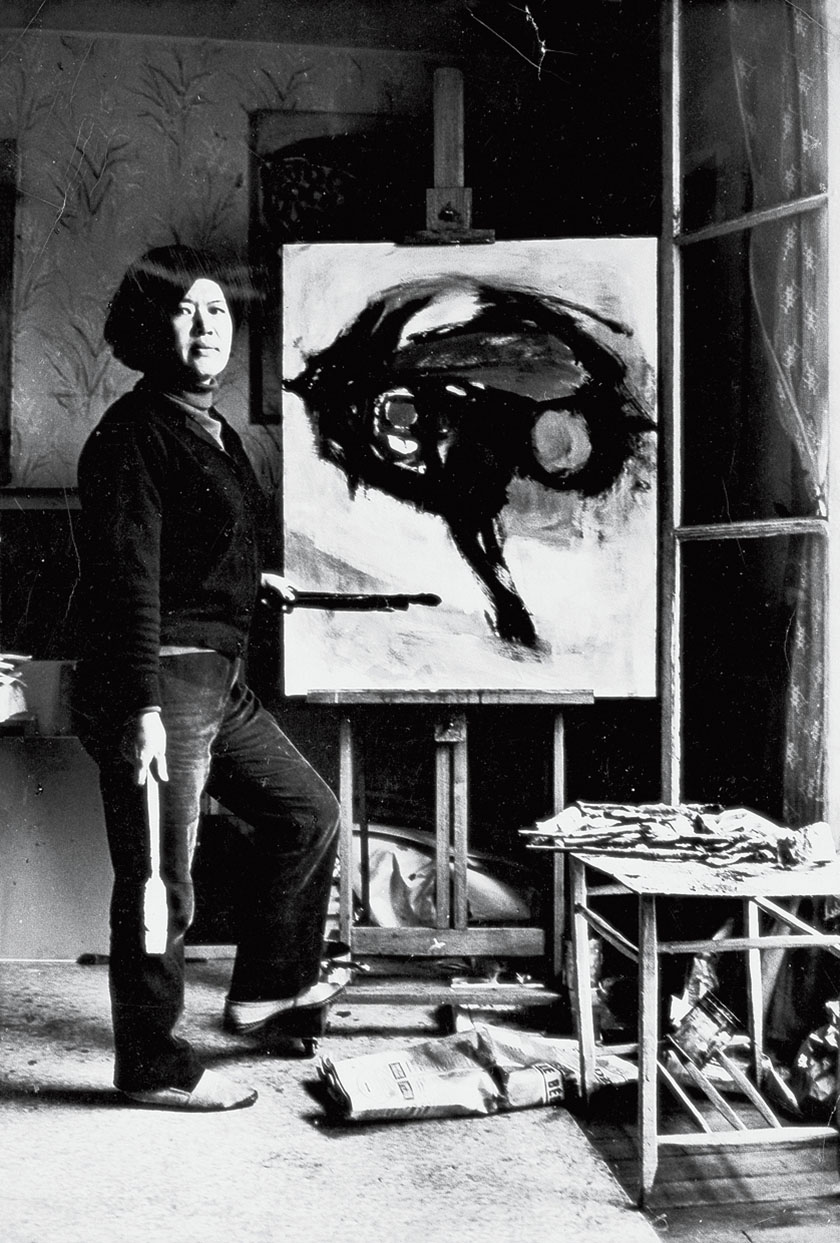
While Pan lent into her Chinese heritage, arguably exoticizing the East for a Western audience, and Lalan's work bore traces of classical Chinese ink landscapes, in Hoo's art, one has to look harder for influences of her homeland. Rather, the bold lines and warm, earthy tones that dominate so many of Hoo's canvases can be traced to the years she had lived in Brazil and Spain.
Wang sees the influence of Taoism in the stillness and simplicity in Hoo's work. She contends that the stark simplicity of Hoo's still-life paintings is owed to an elemental Oriental sense of space rather than American Minimalism, which was popular at the time. A closer inspection of Toy Series 11 reveals a traditional Qing Dynasty (1644-1911) chair.
Notably, the greatest stylistic shift in Hoo's art came after she visited China for the first time in more than four decades in 1996, at the age of 72. The occasion was the first of three major retrospectives of her works staged at the Shanghai Art Museum. Buoyed by the embrace, she moved to the city in 2002, and would go on to donate more than 100 pieces to the institution.


- Locajoy Theme Park throws fruit feast birthday for red pandas
- Students from five nations play soccer friendly in Ningxia
- Scientists funcover how giant deep-sea isopods survive years without food
- Lhasa's record-holding boat tour narrates city's historical legacy
- Telecom and online fraud cases fall for eight consecutive months
- China issues rainstorm alert as heavy downpours forecast in southern regions





