



China-ASEAN trade grows 9.1%, boosting Guangxi's role









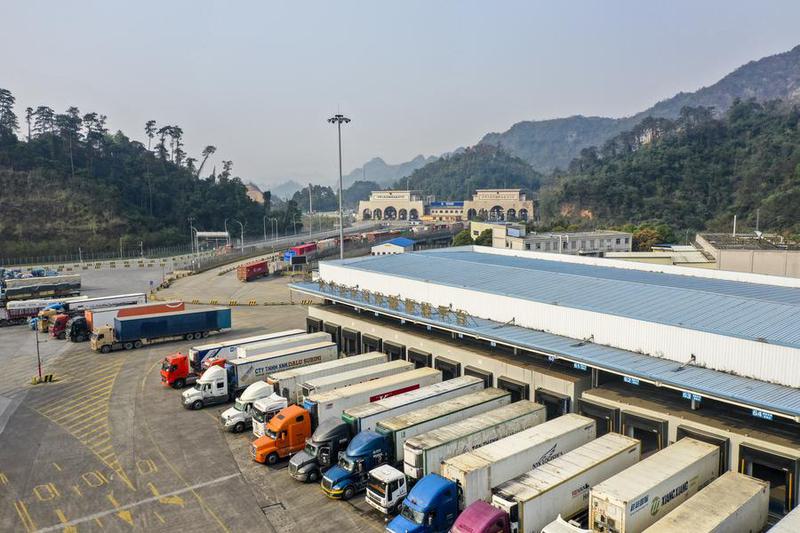
China's trade with the Association of Southeast Asian Nations continues to gather pace, with bilateral trade rising 9.1 percent in the first five months of the year, according to the latest data from the General Administration of Customs.
The bilateral trade accounted for 16.8 percent of the country's total foreign trade value, customs data showed.
The figures reflected nine consecutive years of steady trade growth between China and ASEAN, with both sides holding top trading partner status for five years.
In this booming trade, Guangxi Zhuang autonomous region has seen a rise in business, especially in agriculture.
Beibu Gulf Port, a key hub on the new western land-sea corridor, links China's western regions with ASEAN and global markets. It plays a vital role in connecting inland provinces and serving as a transit point for goods from Chongqing, Hunan and Anhui, before they are shipped to Southeast Asia and beyond.
Besides, Guangxi, a major fruit-producing region, also serves as a key gateway and distribution hub for ASEAN fruit imports, accounting for over 20 percent of the country's total fruit trade with ASEAN, as reported by CGTN.
In June, the region is filled with the scents of Southeast Asian fruits, like durians and rambutans from Malaysia, mangosteens and pomelos from Thailand, and custard apples from Vietnam.


- Inner Mongolia to remain focused on people's livelihoods in 15th Five-Year Plan
- Winter chill turned into hot economic driver
- Various events held across China to mark Intl Women's Day
- Hubei sends a strong signal of high-quality development to the world
- Jiangxi accelerates development of emerging, future industries, as well as green development
- Hainan Free Trade Port strengthens role as gateway for high-level opening-up





