



Age-old art form gets new lease on life









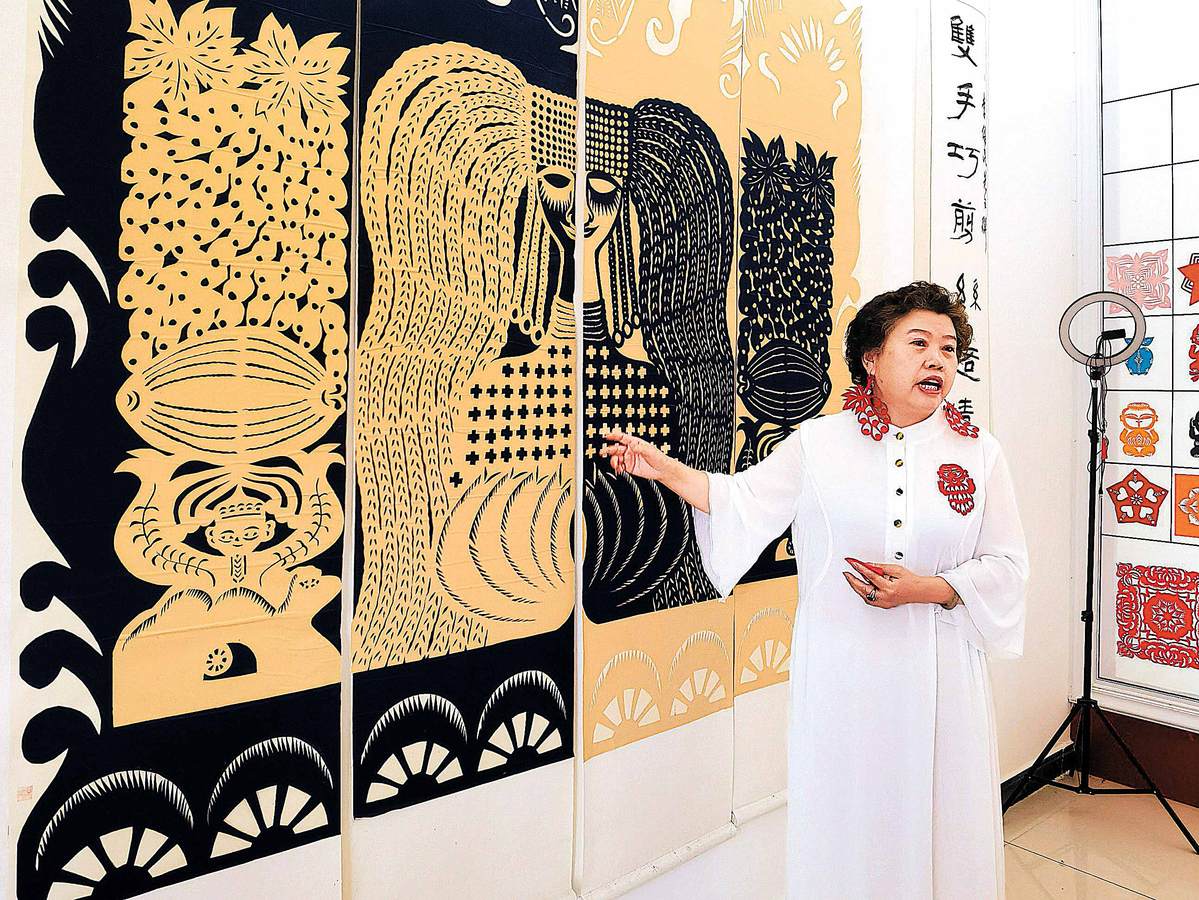
Paper-cutting expert uses her skills and works to reflect home area's history and culture, both ancient and modern. Zhang Yi reports from Turpan, Xinjiang Uygur autonomous region.
Holding a pair of scissors in her right hand and a sheet of red paper in her left, Ji Yulan created an image of a smiling child in just five minutes.
The 53-year-old craftswoman, an inheritor of the intangible heritage of paper-cutting from the Xinjiang Uygur autonomous region, has been practicing the art form for more than 40 years.
Exquisite red paper-cut decorations stand out against her white dress, including the image of a child on her chest and two clusters of grape-shaped "earrings" that fall to her shoulders.
In 2009, the traditional Chinese folk art of using scissors or a knife to produce patterns on colored paper was included in the UNESCO Representative List of the Intangible Cultural Heritage of Humanity.
Ji was born and raised in Turpan, a city in Xinjiang where the oldest surviving paper-cut pieces (from about 1,500 years ago) were found in the 1950s. She is proud of that local history, and has brought the ancient pieces back to life by replicating them.
She formed her attachment to paper-cutting at age 7. Growing up with her grandmother in rural Turpan, Ji was deeply influenced by the old lady's fondness for the art form.


- China to enhance public awareness of human rights
- Full text: National Human Rights Action Plan of China (2026-2030)
- Expats discover Shanghai's rural treasures by bike
- Chinese scientists report first physics results from JUNO
- China releases national human rights action plan for 2026-2030
- 7 people, 2 companies charged over deadly Hong Kong residential building fire





