



Beijing zone a beacon of Chinese art









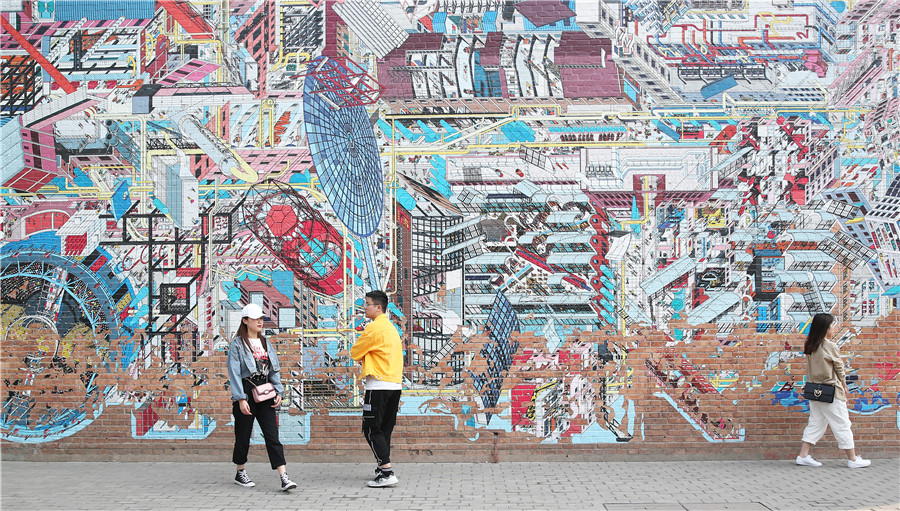
Celebrated hub becomes symbol of nation's growing cultural influence
Editor's Note: This year marks the 70th anniversary of the founding of the People's Republic of China. This is part of a series looking at significant developments in various fields as China increases its interaction with the world.
The smokestack that rises behind the red, refaced stucco facade of the UCCA Center for Contemporary Art in Beijing's 798 Art Zone is a remnant of the factory that originally stood there and points to the area's industrial roots.
The ground-floor walls of the newly renovated museum have been demolished, leaving only supporting columns and glass wraparounds that allow visitors to see the various activities throughout the complex.
"It's about making more connections, about tearing down walls," said Philip Tinari, the museum's director and CEO.
The latest developments at the museum, which is in the heart of the art zone, reflect the area's transformation from artists' enclave to international arts hub.
For many in the arts community, the zone is now considered a beacon of the rise of Chinese contemporary art's global significance. The celebrated art district is also becoming symbolic of the growing confidence and influence of Chinese cultural identity.


- 'Goose leg auntie' admits popular snack was duck, sparking backlash
- China extradites fugitive smuggling organizer
- China to further improve citizens' civil, political rights protection mechanisms in next five years
- China to strengthen environmental rights protection
- Report outlines China's plan for guiding healthy development of emerging human rights
- China vows to promote global human rights governance





