



Tianjin sees PM2.5 plummet over 9-month period









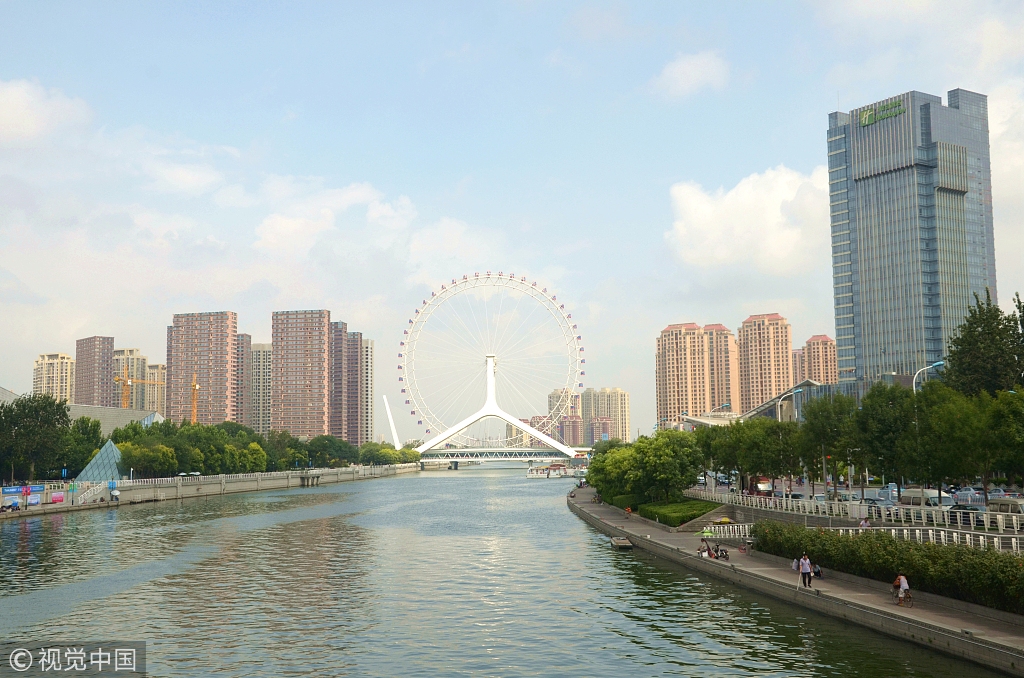
TIANJIN -- North China's Tianjin Municipality saw PM2.5 levels plummet during the past three quarters thanks to effective pollution control, local authorities said Wednesday.
The average density of PM2.5, fine particulate matter that causes smog, in Tianjin dropped to 46 micrograms per cubic meter in the first three quarters, down 23.3 percent year-on-year, the best result ever recorded, according to the city's environmental protection bureau.
Yang Yong, an official with the bureau, noted that Tianjin, which neighbors Beijing, said the average PM2.5 density was 30 micrograms per cubic meter in September, plummeting 40 percent year on year.
The improvement was a result of a series of well-targeted measures, such as promoting clean energy heating, monitoring emissions from factories and the demolition of coal-fired boilers.
From January to July, the average PM2.5 level in 28 Chinese cities prone to air pollution, including Beijing and Tianjin, declined by 13.9 percent year on year, according to the Ministry of Ecology and Environment.


- China releases national human rights action plan for 2026-2030
- 7 people, 2 companies charged over deadly Hong Kong residential building fire
- Chinese researchers treat rare disease via new RNA editing technology
- Chinese scientists identify new midge species in SW China's Xizang
- China releases 150b aquatic juveniles during 2021-2025 to boost biodiversity
- China's anti-graft chief emphasizes high-quality development of anti-graft work





